Geocaching With Kids: How To Turn A Walk Into A Treasure Hunt

X marks the spot
You don’t need mountains, specialist kit or a whole day free to create an adventure. Sometimes all it takes is a set of coordinates and something hidden where you would never normally think to look.
There is something irresistible about knowing that something is hidden nearby. A tiny container under a bridge. A box tucked into a hollow. A cache disguised so carefully that dozens of people probably walk past it every day without knowing it is there.
That is the simple brilliance of geocaching.
It gives a walk a purpose without prescribing exactly what the adventure has to look like. Children have something to find. They can navigate. Search. Interpret clues. Look at familiar places differently.
And because caches exist in parks, woods, towns, along trails and across the countryside, this is an adventure that can start almost anywhere.
For families, that makes geocaching particularly useful. You don’t need expensive equipment. You don’t need to travel far. And you don’t need children who already think going for a walk sounds like an excellent use of their afternoon.
Because sometimes “there’s treasure hidden in those woods – shall we go and find it?” gets a very different response to “shall we go for a walk?”.
So what actually is geocaching?
Geocaching is a worldwide treasure-hunting game in which people hide containers — geocaches, or simply caches — and publish their coordinates for other people to find.

There are more than three million caches around the world, ranging from tiny containers barely large enough for a paper log to much bigger boxes containing items that can be swapped. Every physical cache should contain a logbook or log sheet for finders to sign.
To get started, create a free account with Geocaching, download the official app, and look at the map of caches around you. The app can then guide you towards the coordinates.
Once you find one: sign the log; put it back exactly where you found it; and record your find in the app.
That’s essentially the game. The simplicity is part of its appeal.
Make your first cache an easy win
Open the map and you may discover dozens of caches around you. Geocaches are generally quite widespread, so you have a very good chance of having caches close to home.
Resist the urge to turn the first outing into a ten-cache expedition.

Pick one or two. For the first attempt, look for a traditional cache with relatively low difficulty and terrain ratings. A larger container can also be easier for children to find than a tiny micro-cache. Then read the listing. Look at:
- the difficulty and terrain ratings;
- the approximate container size;
- the description;
- any hint;
- and, importantly, the most recent logs from other geocachers.
Those recent logs can tell you whether people have been finding it successfully or whether several people have recently reported that it may be missing. Your first experience of geocaching is much more likely to capture a child’s imagination if there is actually something there to find.
And take a pen. It is remarkably easy to complete every other piece of preparation and then discover that nobody can sign the log.
The coordinates only get you close
This is where geocaching becomes interesting.
The phone or GPS will take you towards the location. But it usually won’t point precisely at the cache.
As you get close, GPS accuracy can move around, especially beneath trees, beside buildings or in steep ground.

Eventually you need to stop watching the screen and start looking at the world around you.
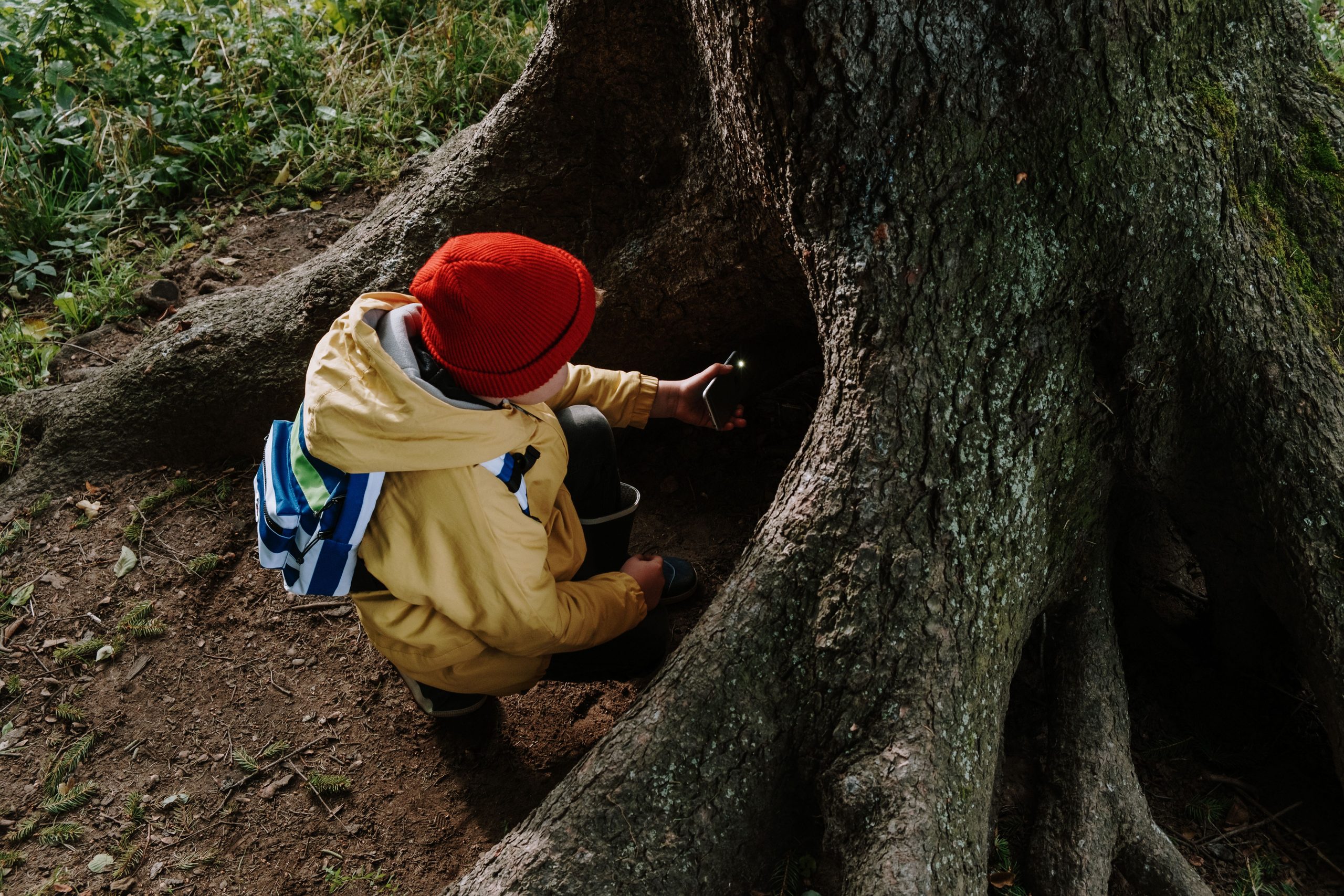
That is where children can take over. What looks slightly out of place? Is there somewhere a small container could be hidden? A suspicious pile of sticks? A hollow? Something magnetic? An object that looks almost — but not quite — like everything around it?
The exact style of hide varies enormously, but that’s the fun.
The technology gets you into the right area. Observation finds the cache.
Let the children make the find
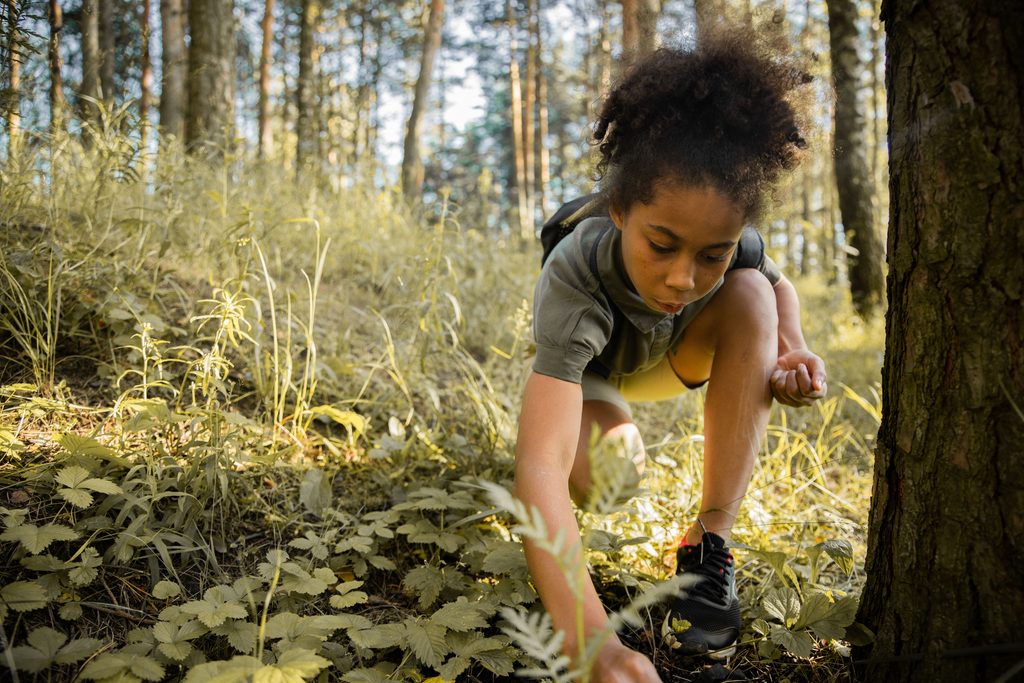
This may be the most important family-geocaching rule of all. If you spot it first, consider keeping it quiet.
Adults are often better at scanning likely hiding places, particularly once they understand how caches tend to be hidden.
But if every search ends with the adult saying “there it is!”, then much of the value disappears.
Let children hold the phone for the approach. Ask them what direction the distance is changing. Let them read the hint. Ask where they would hide something if they were the person who placed the cache. Give them time to search. Offer another clue if they are becoming frustrated.
The adult’s job is still to manage the environment – traffic, water, drops, private land, wildlife or whatever else is around you.
But within those boundaries, give children room to solve the problem. There is a meaningful difference between:
I came with Dad while he found a geocache
and:
I found it.
Those first few searches may feel chaotic. Geocaching has its own little learning curve. At first, you may spend ten minutes staring at a tree while the cache is attached to a fence behind you. Then you start noticing patterns. You learn to stop looking at the phone once you’re close. You begin recognising likely hiding places. Children develop their own theories. And occasionally one of them spots the cache almost immediately while the adults have spent five minutes confidently searching in completely the wrong place.
That is part of the game. There is no requirement to be good at it before you begin.
Sometimes you won’t find it
This is also part of geocaching. You reach the coordinates. Search. Look again. Read the hint. Search somewhere else. Still nothing.
Perhaps the cache is exceptionally well hidden. Perhaps you’re looking in the wrong place. Or perhaps it really has gone missing.
Recent logs can sometimes help you judge which is most likely. But eventually you have a choice: keep searching, or call it.
That is a surprisingly useful little decision for children. There is persistence in having another look. There is problem-solving in trying a different approach. And there is judgement in recognising when you’ve spent long enough crawling around beneath the same hedge.
Not finding the cache does not mean the adventure failed.
Log a “Did Not Find” if appropriate. That information can also help the cache owner understand whether something may be wrong.
Then find another target.
The stakes are wonderfully low, which makes geocaching a good place for children to practise frustration and persistence without either becoming a grand lesson in resilience.
If there’s treasure inside, know what you’re looking at

Larger caches sometimes contain small objects that geocachers can swap.
Toys. Badges. Keyrings. Little trinkets.
In geocaching these are often known as SWAG.
If a child takes an item, the convention is to leave something of equal or greater value for the next finder. That can be part of the anticipation. Let children choose a few small swap items before the trip and keep them in the family geocaching bag.
But watch out for trackables. These may look like ordinary objects but carry a tracking code. They belong to another geocacher and are intended to move between caches, sometimes towards a particular destination. They are not prizes to keep. If you take one, check its goal and log that you have retrieved it before helping it continue its journey.
For children, trackables can open another interesting part of the game. You may find an object that has already travelled hundreds or thousands of miles. Now your family gets to add another piece to its journey.
Look after the game
Part of the fun of geocaching is that most people nearby have no idea the cache exists. So once you’ve found one, leave it ready for the next family. Replace the container in the same place and position you found it. Don’t move it somewhere you think would be better. Don’t publish photographs that reveal the hiding place. Don’t damage vegetation or structures trying to find a cache. Don’t dig. Don’t trespass or ignore local rules because the coordinates appear to point somewhere you shouldn’t be. Official geocaching guidance is explicit that finding a cache never justifies damaging the environment, trespassing or breaking local rules.
A useful family principle is:
Finding the cache isn’t more important than looking after the place where it is hidden.
That makes the etiquette part of the adventure rather than a list of rules added afterwards.
Geocaching gives a chance to explore, not just collect numbers
Once children discover geocaching, there is a risk that every outing becomes:
How many can we get?
There is nothing wrong with collecting finds. That’s part of the fun. But caches can also be used differently.
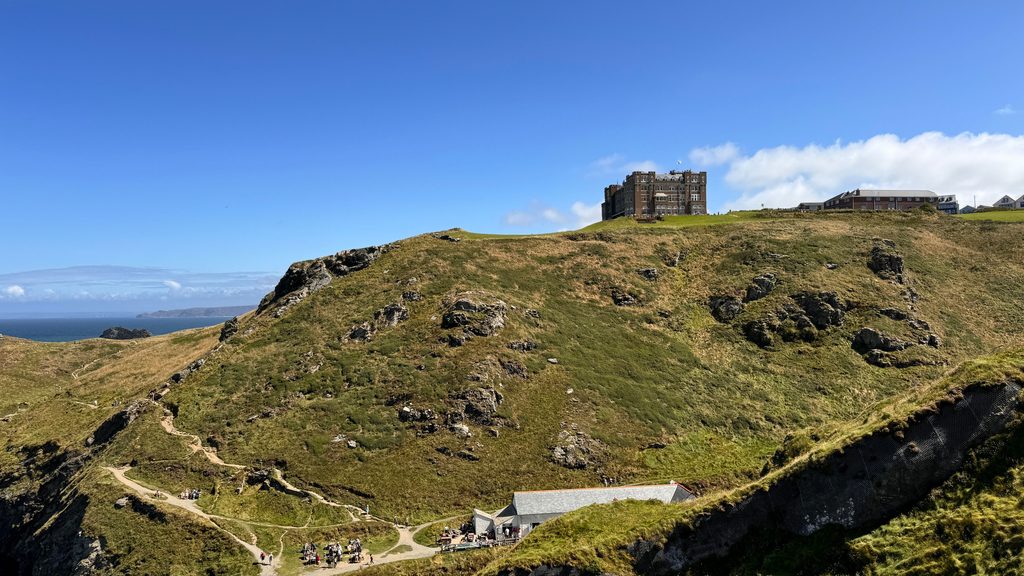
Choose one that gives you a reason to explore a woodland you’ve never visited. Find a few along a family cycle route. Look for one near the summit of a hill. Use caches to break up a longer walk. Search for one while visiting another part of the country. Let a child choose a cache on the map and make that the destination.
Geocaching is particularly good at leading families towards small places they might otherwise never have had a reason to notice.
An old bridge. A viewpoint. A tiny patch of woodland. An unusual piece of local history.
The cache gets you there. What happens around it is often the bigger adventure.
Where geocaching can lead
Your first cache may be ten minutes from home. Then perhaps you try a woodland trail with several. Take it on holiday. Use it to explore a new town. Build a whole day around a series of caches. Follow the journey of a trackable.
And as the family gets more experienced, hand more of the process over to the children. Let them choose the cache. Check its difficulty. Read the recent logs. Work out the route. Navigate towards it. Decide when to use the hint. Sign the log. Record the find afterwards.
At first, the adult may be doing most of the organising. Later, you may hear:
“I’ve found one. It’s 1.4 kilometres away and there’s a path from this car park.”
That is progression too. Adventure does not always need to become physically harder for children to become more capable within it. Sometimes it is about taking more responsibility for making the adventure happen. And eventually, if geocaching really catches on, your family might even decide to hide a cache yourselves.
That brings a new layer of responsibility to other players – choosing an appropriate location, getting permission where needed, maintaining the cache and following the placement rules – so it is something to learn properly rather than simply hiding a box and publishing coordinates.
There is no need to rush there. The beauty of geocaching is how easily it can grow from one small search into a family habit of exploring places, solving problems and taking the lead.