

Your First Family Camping Trip: How To Make It Work
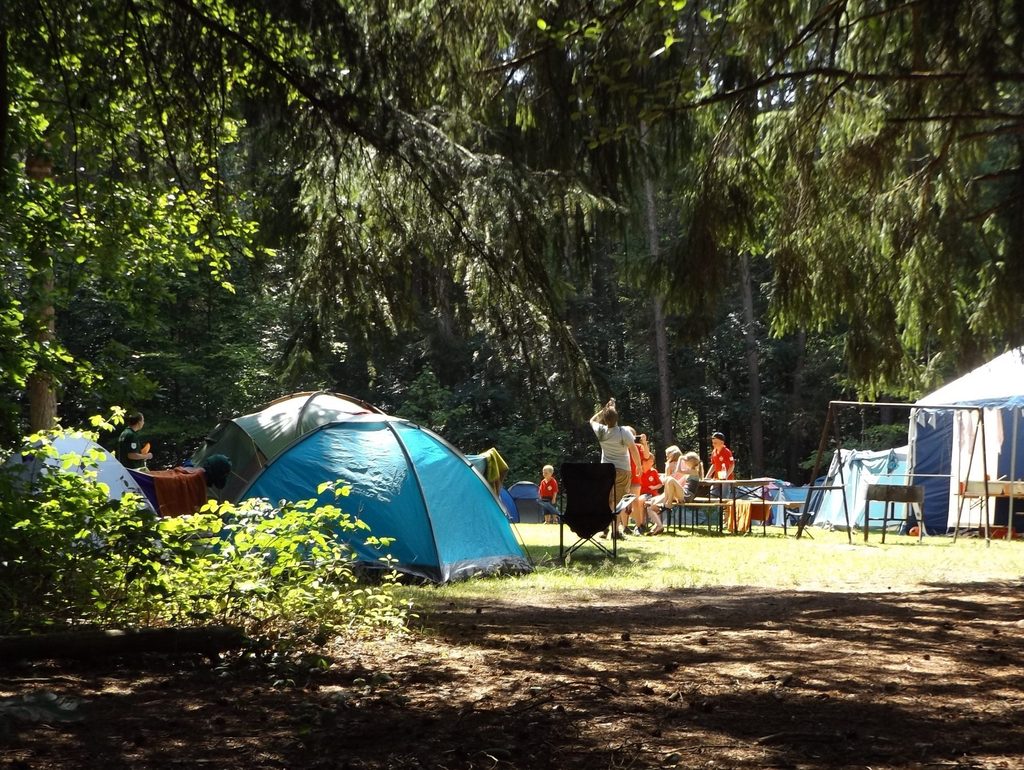
Camping gives your family more time inside the adventure
Here’s how to make your first night under canvas comfortable, manageable – and the beginning of something bigger.
Camping feels fundamentally different to a day spent adventuring outdoors. The walkers head back to their cars. The cyclists head to the pub. The noise subsides. The light begins to fade. And your family stays.
That is one of camping’s great gifts. It lets you experience the parts of a place that normally happen after you have gone home. Dinner outside. The temperature dropping with the sun. Children wandering around in headtorches. Stars appearing. Waking to morning light through the tent. Breakfast before the day has properly started.
Camping doesn’t have to be difficult or remote to offer that. Even one night at an ordinary campsite changes the rhythm of family life for a while.
And because you have to make a small temporary home together, everyone has a part to play. Someone carries the poles. Someone pumps the mattresses. Someone finds the headtorches. Someone fetches water. Someone inevitably asks whether the tent is finished yet while standing directly on the bit of ground where you need to put the next peg.
That shared effort brings people together. Camping gives families more time together inside the adventure, and learning how to make that time work opens the door to much more.
So for the first trip, the goal is not to prove how little comfort you need. It is much simpler:
come home knowing your family can do this — and wanting to do it again.
Make the first trip deliberately straightforward
You don’t need a week in the Highlands to discover whether your family likes camping. Start with one or two nights. Choose somewhere easy to reach. Go when the forecast is reasonably kind. Use a campsite with enough facilities that basic logistics are not becoming part of the challenge. And have a straightforward route home if the experiment genuinely isn’t working.
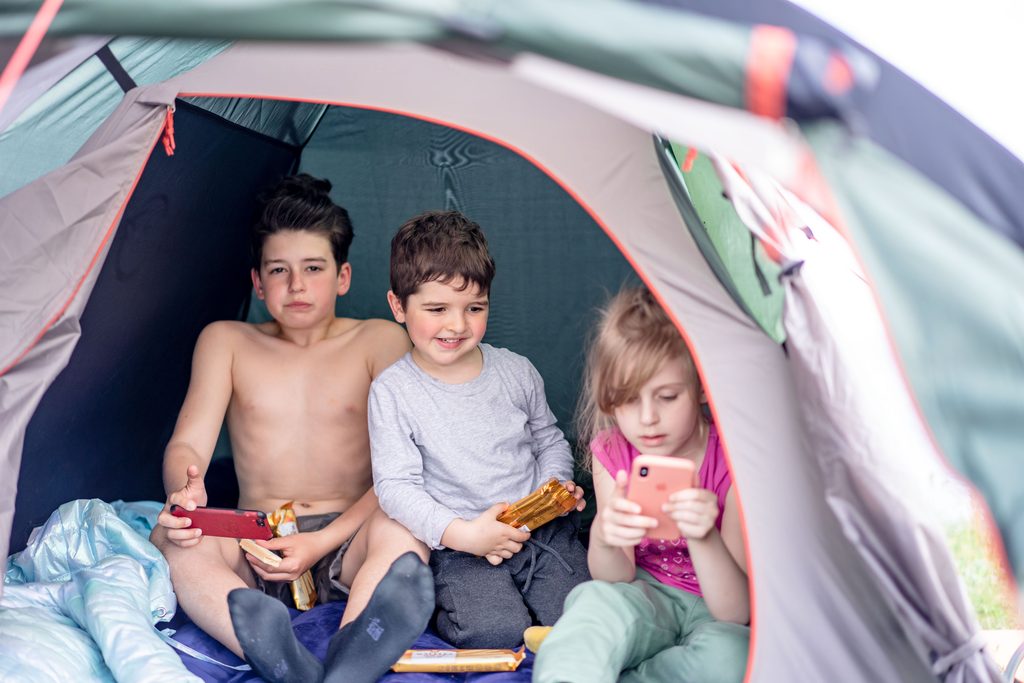
This isn’t lowering the ambition. It is separating learning to camp from everything else you might eventually want camping to make possible.
If the first trip involves torrential rain, a complicated stove, a four-hour drive, a brand-new tent nobody has practised pitching and children who are exhausted before the beds are made, you learn very little about whether your family actually enjoys camping.
You mostly learn that too many new problems arrived at once. A first camp should create margin. Time to work things out. Time for children to explore. Time to fix a mistake without everyone getting hungry and cold.
And ideally enough energy left to enjoy being there once the tent is up.
Warmth and sleep come first
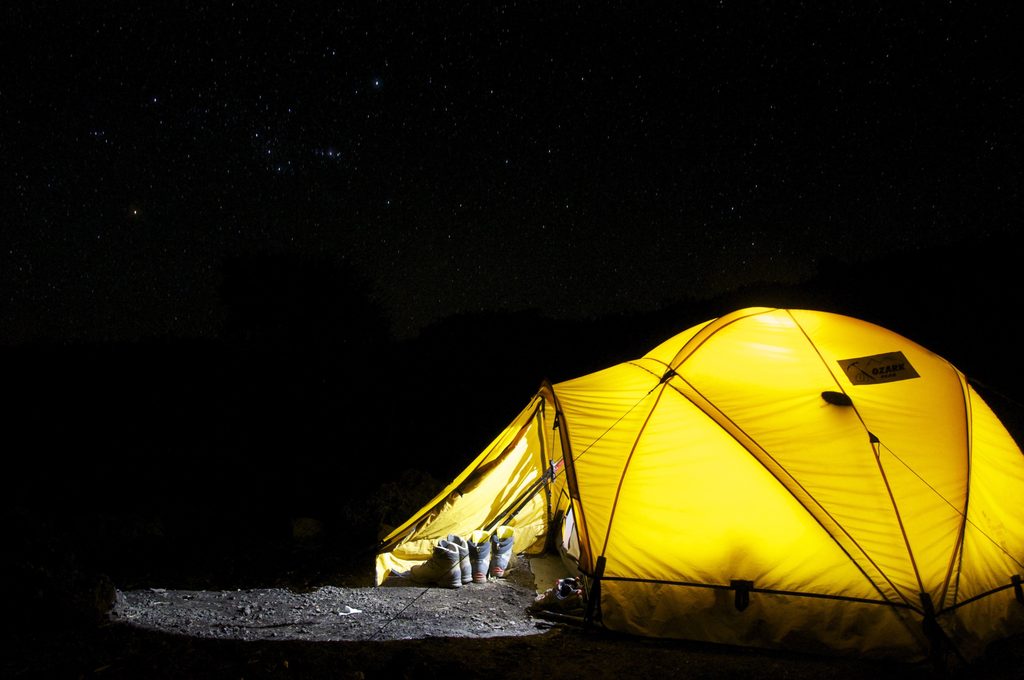
If there is one part of family camping worth getting right early, it is the night.
A child who spends eight hours cold and uncomfortable is unlikely to care how beautiful the sunrise was.
So think about warmth from underneath as well as above.
Sleeping bags insulate the top and sides of the body, but bodyweight compresses the insulation beneath you. That means the sleeping mat matters. A comfortable, insulating mat (or airbed) and a suitable sleeping bag usually do far more for the experience than most of the optional camping equipment you can buy.
Give children dry clothes specifically for sleeping too. If daytime clothes have become damp from rain, sweat, streams or enthusiastic puddle investigation, don’t make those the night clothes. Keep something dry.
Bedtime may also feel different from home. There are unfamiliar noises. The tent moves in the wind. It gets properly dark. Someone needs the toilet after everyone is zipped into sleeping bags. Young children may simply be too excited to sleep at their usual time.
Don’t make that a battle unless it needs to be. Keep some familiar parts of the normal routine – story, favourite toy, whatever works – while accepting that sleeping somewhere new is itself part of the experience.
And make the night easy to manage. Everyone should know where the headtorches are. Shoes should be somewhere they can be reached without dismantling the tent. Know how you are handling nighttime toilet trips before somebody announces the need urgently at 2am.
Small systems make a big difference.
Keep camp life simple
There is an entire industry ready to sell you equipment that can turn a campsite pitch into a small suburb.
You do not need most of it for the first trip.
What you need is a camp that works.

A dry place to sleep. Warmth. Food and water. Light. Somewhere sensible to put things. Clothes appropriate to the weather. And a way of keeping the important things easy to find.
That last one matters more than it sounds. Camping becomes irritating when every small task involves searching through six bags. So create a few simple rules. Headtorches live here. Food lives there. Wet shoes don’t go in the sleeping area. Dry night clothes stay packed until bedtime. Anything likely to be needed quickly stays accessible.
You don’t need an elaborate system. You just need one the whole family can understand.
Make food easy, too

Your first camp is probably not the moment to demonstrate wilderness culinary excellence. Choose food that is easy to prepare and that everyone will actually eat.
If cooking outside is part of the fun, great. Keep it straightforward.
If the campsite has somewhere nearby to eat and you’d rather use that on the first evening, that works too.
The important thing is that food does not become another complicated problem at exactly the point everyone is tired.
Keep snacks accessible as well. Children rarely coordinate hunger with the official meal plan. And there is something about being outside all day that seems to accelerate the appearance of “I’m starving!”. Plan for it.
Let children help make the camp work
Camping gives children unusually obvious ways to contribute. Use them. A younger child can carry pegs. An older one can help assemble poles. Someone can organise the sleeping area. Fetch water. Pass equipment. Check the pitch before you leave.
These do not need to be invented “children’s activities”. They are real jobs. That’s the point.
Children get to experience the campsite not simply as somewhere adults have brought them, but as something the family has built and is running together.
As they get older, increase the responsibility. Let them learn how the tent works. Pack some of their own equipment. Manage their sleeping kit. Help plan meals. Eventually perhaps pitch their own tent.
Capability grows because they have repeated opportunities to practise something that genuinely matters.
Leave room for what happens after the tent is up
It is easy to plan camping around the logistics. Arrive. Pitch. Cook. Sleep. Pack. Leave.
But some of the best parts happen in the spaces between those things. Let children explore the campsite. Walk somewhere after dinner. Sit outside when it gets dark. Listen for wildlife. Play cards in the tent. Watch the weather moving through. Have breakfast outside slowly.
If the location has a walk, beach, woods or stream nearby, brilliant. But you do not necessarily need a programme. Part of camping’s value is that once you stop travelling for the day, you are still in the adventure.
There is nowhere you urgently need to be next. At Adventure Baggers, we firmly believe that children already know how to find the adventure in the everyday. Our task, as parents, is to slow down enough to join them there.
Camping truly is one of the best places for that.
Expect a few things to go wrong – but don’t make hardship the point
Something probably won’t go to plan. You’ll forget something. A peg will bend. A child will spill water inside the tent. Dinner will take longer than expected. Someone will be cold, overtired or unable to find the shoe that was definitely here five minutes ago.
That is part of learning how your family camps.
But there is a difference between accepting a little friction and deliberately making the experience harder than it needs to be.
If a bigger tent helps everyone sleep, take it. If chairs make the evening better, use them. If a campsite with good facilities makes the first trip easier, choose it. If eating somewhere nearby removes one unnecessary complication on the first night, that is completely fine.
Comfort is not the enemy of adventure. Often it is what allows a family to stay outside longer, enjoy the experience and build enough confidence to try something more ambitious next time.
So treat the first trip as useful information. What worked? What did nobody use? What did you wish you had brought? What made bedtime easier? What would you do differently next time?
Camping becomes much easier once the family stops solving every problem for the first time.
Learn from the discomfort that happens naturally. There is no need to manufacture more of it.
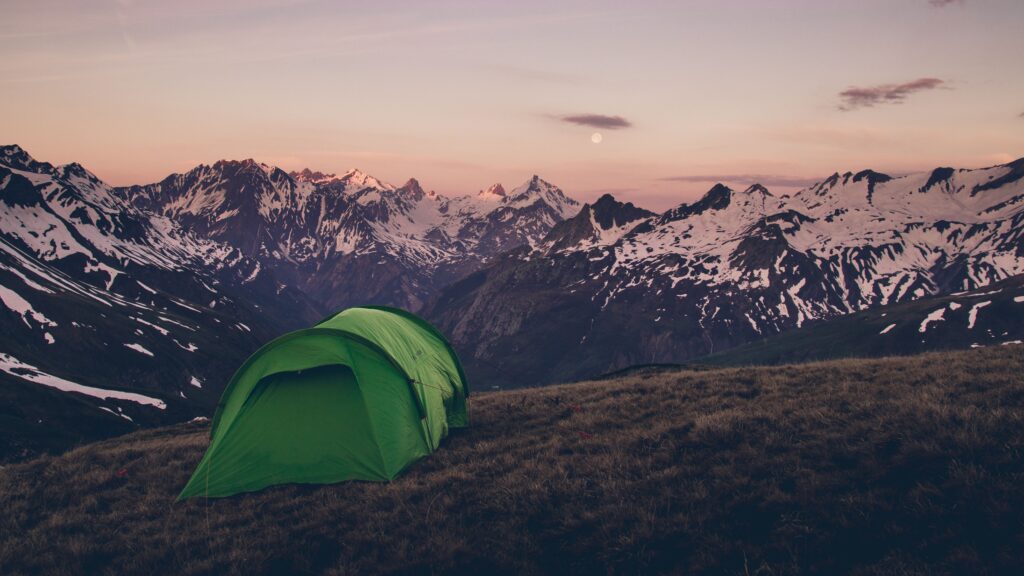
Where camping can take you
Once your family knows how to make sleeping outside comfortable and manageable, camping changes role. It doesn’t have to be the whole adventure anymore. It can extend another one.
Walk somewhere and stay overnight. Ride there on bikes. Load camping kit into a canoe. Spend a weekend moving between different places. Camp closer to an early-morning objective. Stay in the landscape rather than driving away from it. Eventually, perhaps, try a more remote campsite or a carefully planned first wild camp where access arrangements allow.
The point isn’t that camping should become progressively harder. It is that learning to camp gives the family more options. A day adventure can become a weekend. A place that was previously too far away becomes achievable. A journey can continue tomorrow. And children who initially needed adults to organise everything can gradually become part of the team that makes those bigger adventures possible.
That is where camping becomes really powerful. The tent is no longer the destination.
It’s what lets the family stay for the next part.
So, what does all of that mean for your first family camping trip?
Keep the first one simple. One or two nights. Somewhere manageable. A decent sleep system. Easy food. Enough warmth. Time for children to contribute. And enough space in the plan to enjoy actually being there.
You don’t need to prove anything. The success of the first camping trip isn’t measured by distance from civilisation, how little equipment you used or how difficult the conditions were.
It’s measured by what becomes possible afterwards. If everybody comes home knowing a little more about how to sleep outside, how to make camp work together and what they would do differently next time, the family has gained something useful.
And if, somewhere on the journey home, somebody asks:
“When are we going camping again?”
you’ve probably got the important bit right.
