

Horse Riding: Where Could It Take Your Family?
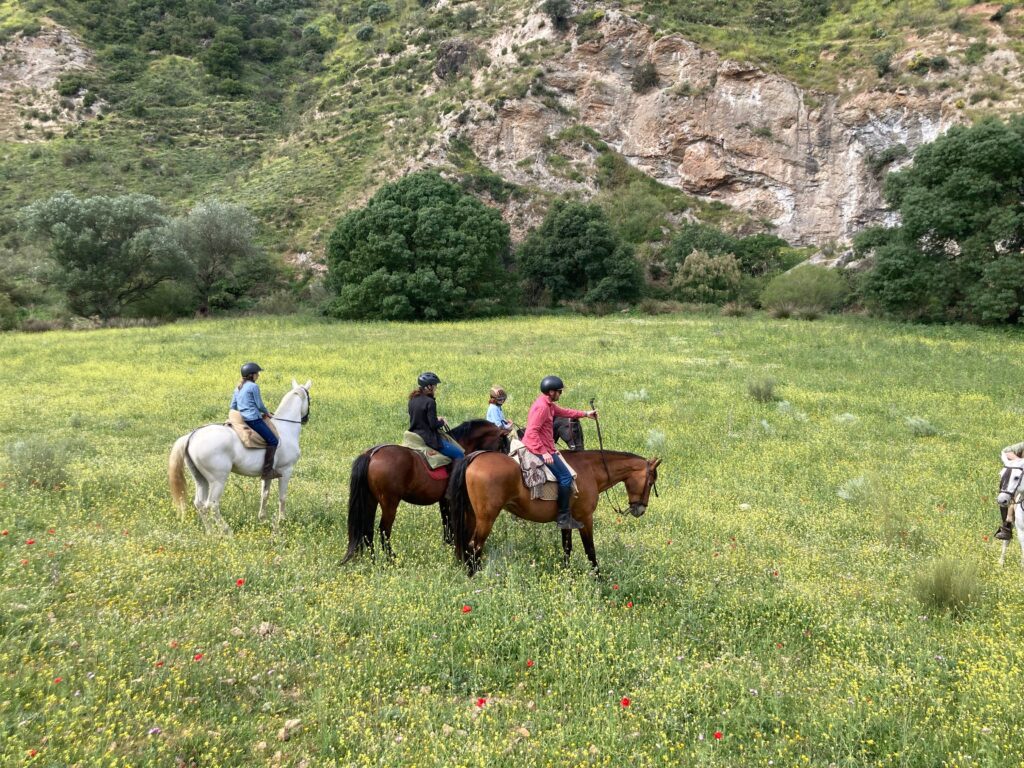
The first riding lesson might begin in a quiet arena on a steady pony. But it could be the first step into a much bigger world
Most riding journeys begin in much the same way. A riding school. A borrowed hat. A patient pony. Learning how to get on, how to hold the reins, how to stop, steer and eventually trot without feeling as though every part of you is moving in a different direction.
At that point, horse riding can look like one activity. It isn’t.
Learning to ride is the doorway into an enormous world of possibilities.
Some riders discover that they love jumping. Some become fascinated by the precision of dressage. Some want nothing more than to leave the arena behind and spend hours exploring the countryside on horseback. Others discover mounted games, endurance riding, eventing or competition.
And some may never particularly care about competing at all. Their perfect riding day might involve a mountain trail, a quiet bridleway, or cantering along an empty beach with the sea beside them.
That is one of the things we love about horse riding. There isn’t one destination. There are dozens of directions it can take you.
Start at the beginning
Whatever the eventual dream, lessons are the place to begin. Riding is a partnership with a large, powerful animal. Balance, communication, control and confidence all take time to develop — and children also need to learn how horses behave and how to be around them safely. A good riding school provides that foundation.

Early lessons may feel very structured. Walk. Halt. Steer. Rising trot. Transitions. Position. But every one of those skills unlocks something later. The child learning to control a pony around an arena today may eventually use those same foundations to ride across a Welsh hillside or approach their first jump.
The British Horse Society describes learning to ride as a journey that can range from mastering the basics to dressage, hacking and even galloping on a beach — and recommends learning through reputable, well-run establishments where horse welfare and rider safety are priorities.
Skills give freedom.
Horse riding is a particularly good example of why.
So where could riding take you?
Hacking: leave the arena behind
For some riders, this is where horse riding really comes alive. Hacking simply means riding out rather than staying within an arena. That might be a gentle ride down local lanes and bridleways. But it can become much more. Woodland tracks. Open countryside. Moorland. Forests. Hills. Long days travelling from place to place.
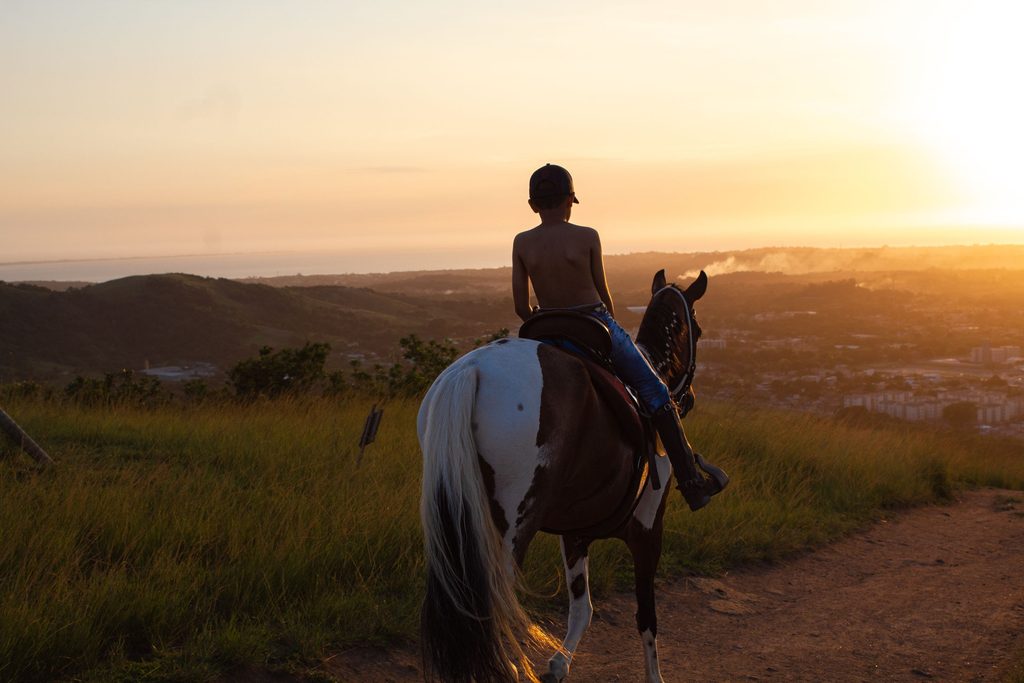
Riding out introduces a different set of skills. Horses encounter traffic, dogs, gates, water, livestock and unexpected things around the next corner. Riders start making decisions rather than simply following instructions from the middle of an arena.
And the landscape becomes part of the experience. For families who love being outdoors, hacking can create a wonderful meeting point between horse riding and adventure. The BHS describes riding out as everything from everyday hacking to exploring off-road routes, beaches and upland country.
Beach riding: one for the memory bank

There are some experiences that lodge themselves permanently in childhood memory. Riding a horse along a beach can be one of them. Wide sand. Open sky. Waves alongside you. And, once the rider has the experience and the conditions allow it, the extraordinary feeling of moving at speed across an enormous open space.
You don’t need to own a horse to experience it. Riding centres and trekking providers in parts of the UK offer organised beach rides for suitably experienced riders.
It needs proper planning — tides, local restrictions, other beach users, wildlife, footing and how horses respond to an unfamiliar environment all matter. But with the right provider and the right experience level?
This is horse riding becoming adventure travel.
Hills, mountains, and trail riding

Now take that same idea inland. There are places around Britain where horses have travelled across hills and ancient tracks for centuries. Upland riding can mean following old routes between valleys, crossing moorland or spending hours travelling through landscapes that would feel like a significant walk on foot.
For experienced riders, guided trail rides and riding holidays can open up entirely new ways of exploring. And the perspective is different from walking. You notice the rhythm of the horse. The wildlife. The weather. The changing ground beneath you. The enormous quiet that sometimes comes with travelling through open country without an engine anywhere nearby.
For some families, this may be the point where horse riding stops feeling like a sport they attend each week and starts feeling like a way to see the world.
Or perhaps competition is the adventure
For other children, the excitement comes from working towards something. A course. A test. A competition. A personal best. Riding has no shortage of possibilities.
Showjumping
Horse and rider tackle a course of fences, combining control, balance, rhythm, judgement and — as the fences grow — plenty of courage.
For a child who discovers they love jumping, those first tiny poles can lead through riding-school competitions, Pony Club and local shows all the way into serious competitive sport.

But the achievement doesn’t need to be measured in rosettes. Sometimes the victory is simply looking at a fence that once felt enormous and realising: I can do that now.
Dressage
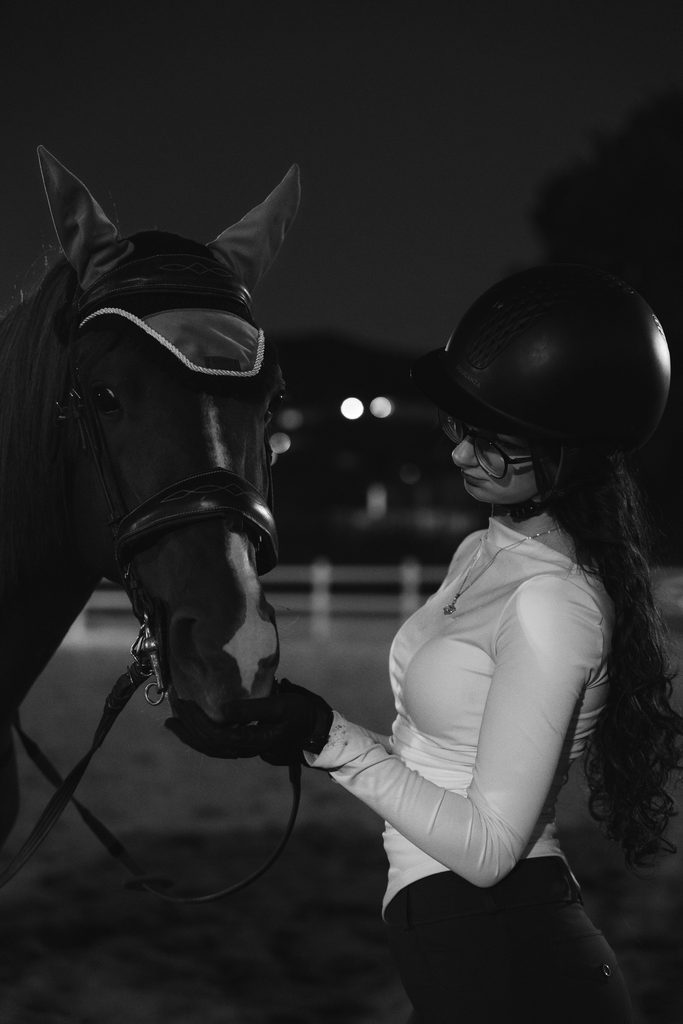
Dressage offers a very different challenge. Rather than speed or fences, the focus is communication, accuracy, balance and the quality of the partnership between horse and rider.
To somebody watching their first dressage test, it can look deceptively simple. Ride a circle. Change direction. Make a transition at a particular marker. But doing those things precisely, smoothly and almost invisibly takes considerable skill.
For children who enjoy detail, progression and gradually refining something, dressage can provide years of challenge.
Eventing
Then there is eventing — combining dressage, showjumping and cross-country.
It asks for different abilities from both horse and rider: precision in one phase, accuracy over coloured fences in another and then confidence and judgement across country.
For a young rider who wants variety, it can open yet another pathway.
Mounted games: fast, sociable and enormous fun
Not every branch of riding needs to feel serious. Mounted games are fast, energetic and often brilliantly chaotic to watch.
Riders race individually, in pairs or teams through games requiring speed, accuracy, agility, coordination and excellent pony control. There is also a strong social element: teammates, training, competitions and the wonderfully distinctive culture that grows around Pony Club life.
The Pony Club describes mounted games as developing accuracy, agility, concentration, coordination, teamwork and sportsmanship — all while racing ponies and having a considerable amount of fun. For the right child, that combination can be irresistible.
And there are still more doors
Dressage, jumping, hacking and eventing barely scratch the surface.
There is showing. Pony racing. Polocrosse. Polo. Tetrathlon. Horseball. Vaulting. Carriage driving. Endurance. Organised pleasure and fun rides. Riding holidays. And disciplines or styles of riding a child may not encounter until years after their first lesson.
The point isn’t to choose a pathway at the beginning.
It’s to know that the pathways are there.
Let children try things. Notice what excites them. Some will love competition. Some will love speed. Some will become fascinated by technique. Others will be happiest miles from an arena with muddy boots and a pony beneath them.
There is room for all of them.
Horses can become so much more than the riding

There is something else families often discover.
The deeper a child gets into horses, the less the story is simply about what happens in the saddle.
They learn to groom. Muck out. Fill haynets. Clean tack. Notice when a horse isn’t quite behaving normally. Understand what it eats. Bring ponies in from fields on cold dark evenings. Get up ridiculously early because something needs doing before school. And begin to understand that having a relationship with an animal comes with responsibility.
For some children, the stable yard becomes one of their places. They know the routines. They know the horses. They make friends. Adults trust them with real jobs. Their competence grows.
And eventually you realise that what started as an hour’s riding lesson has become a whole world in which they belong. That can be enormously powerful.
You don’t have to buy a pony
It’s worth saying this early. Because families can sometimes look at the horse world from the outside and assume there are only two options: Weekly lessons. Or buying a horse.
There is a huge amount of space between them. Riding-school lessons and hacks. Pony Club centre membership. Activity days. Camps. Competitions on riding-school ponies. Riding holidays. Later, perhaps, sharing or loaning a horse.
Ownership might eventually become the right choice for some families. For many others, it won’t.
You don’t need to own a horse to build a life that includes horses.
And there is real value in allowing children to discover how deep their interest goes before a family takes on the considerable commitment that ownership brings.
Riding doesn’t have to belong only to the child
There is another possibility. Ride together.
Parents don’t always need to become spectators standing beside an arena holding somebody’s coat. Plenty of riding centres cater for adults too, including complete beginners. That creates an unusual opportunity.
A child might initially be the one who wants to ride. Then Mum or Dad takes a lesson. Eventually everyone has enough experience for a family hack. And years later, perhaps the family is riding together somewhere completely new.
There aren’t many activities where a nine-year-old and a forty-nine-year-old can both be learning, progressing and eventually sharing the same adventure. Horse riding can be one of them.
Let the horse take you on a journey
So if your child has just announced that they want to ride a pony, don’t worry yet about where it all leads.
Find a good riding school. Book a lesson. Let them learn. See whether they come back smiling.
Because the wonderful thing about horse riding is that nobody needs to know the destination at the beginning.
Perhaps it remains something they enjoy for an hour each week. Perhaps they discover jumping. Perhaps the yard becomes their second home. Perhaps you’ll eventually spend freezing Sunday mornings watching competitions and wondering exactly how your life came to involve quite this much mud. Or perhaps, years from now, you’ll find yourselves somewhere entirely unexpected — following a trail through the mountains or riding together beside the sea.
The first lessons teach a child how to ride.
Everything after that is about discovering where riding might take them.