

Adventure As A Single Parent: You Don’t Need Another Adult To Start
Parenting On Your Own Terms
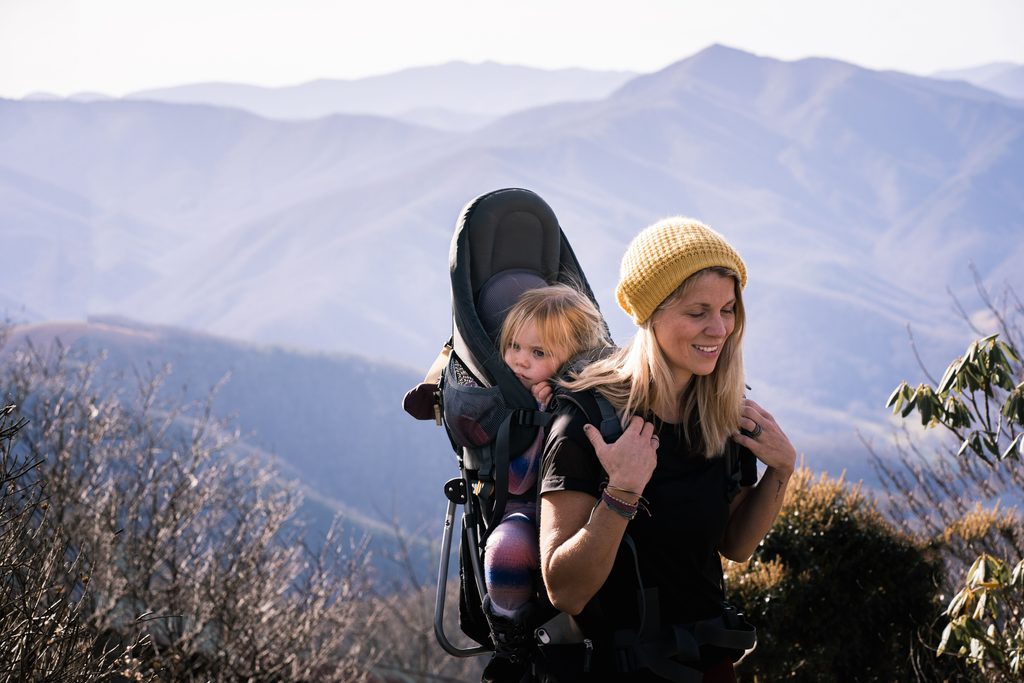
Adventure can feel harder to access when you’re the only adult responsible for everything. But with the right choices, it can also become one of the richest parts of single-parent family life.
This one’s personal. I became a single parent to my daughters, with 50/50 care, when they were nine and eleven. And so, for years, our time was just the three of us. That meant just one adult doing the planning. One adult carrying the responsibility. One adult making the call when something went wrong.
But also one adult who got to ask a rather wonderful question: what kind of family do we want to be?
We travelled. We adventured. We explored new places together. Horse riding became an enormous part of my youngest daughter’s life, opening up a world that would shape much of her childhood. One Republic’s ‘I Lived’ became the soundtrack to our lives. And, somewhere along the way, adventure became part of the culture of our little family.
There is a particular kind of mental arithmetic that comes with parenting alone. How many children? How many hands? Who needs watching? Who needs carrying? What happens if somebody gets hurt? Can I manage the kit? Can I keep everybody safe? And perhaps, underneath all of that: can I really do this on my own?
I know those questions because I’ve asked them. But I also know what sits on the other side of them. My daughters are at university now. We’re extraordinarily close. There are obviously many reasons for that, but I have no doubt that the things we experienced together played a part.
The miles travelled. The places explored. The ridiculous moments. The difficult days. The things we learned to do together. The conversations that happened along the way.
Adventure gave us more than days out. It helped us become us.
And that is why I care so much about making sure single-parent families don’t quietly conclude that adventure belongs to somebody else.
Because it doesn’t.
Start with the practical reality
Some activities are simply easier to manage as a lone parent than others. That isn’t about bravery. It’s about supervision.
Imagine one adult with three young children around deep water.

Even if everybody is wearing the right equipment, the consequences of several things going wrong at once are very different from being on a woodland trail where the children can stop, regroup and wait.
That doesn’t make paddlesports a bad activity for single-parent families. It may simply mean that professional provision is the better entry point. The same principle applies elsewhere. Rather than beginning by trying to find the most exciting thing to do, ask “what can I comfortably manage with these children, at these ages, today?
That question opens far more doors than it closes.
Great places to begin
Walking
Walking is probably one of the most accessible adventure activities for a single-parent family. It is cheap. It needs relatively little equipment. You can start close to home. And most importantly, it is enormously scalable.
A toddler can explore a woodland trail. A few years later, the same family might walk its first hill. Eventually that could become mountain days, long-distance trails or family challenges.
You can turn around whenever you need to. You can choose routes with cafés, toilets and easy escape options. You can shorten the day because somebody is tired without needing to abandon a booked activity.
And as children grow, they begin carrying more of their own kit and taking more responsibility themselves. That changes the equation enormously. What once felt like one adult managing several small children gradually becomes a team travelling together.
Cycling
Cycling can be fantastic, but the details matter.
Traffic-free routes make life much easier.
So do children who can stop reliably, follow instructions and manage their own bikes.
With younger children, trailers, child seats and tow systems can create possibilities — although one adult needs to think carefully about how many children and bikes they can realistically manage.
Professional venues can help.
Traffic-free cycle centres, BMX tracks, coached mountain-bike sessions and bike hire can remove much of the complexity.
You don’t necessarily have to own all the equipment before discovering whether the family actually enjoys the activity.
Nature adventures
Never underestimate the adventure potential of somewhere relatively contained.
Woodlands. Nature reserves. Country parks. Beaches. Streams. Fossil hunting. Rock pooling. Wildlife spotting. Den building.
These places can provide huge amounts of exploration without requiring complex logistics or specialist skills.
For younger children in particular, adventure does not need to mean travelling far or doing something technically difficult. The objective is simply to create that feeling of:
Let’s go and see what we can find.
Camping
Camping is another activity that can work beautifully for single-parent families. But start gently. A campsite with toilets, showers and a shop twenty metres away still counts as camping. You do not need to begin with a remote wild camp carrying everything on your back.
For one adult, the biggest issue is often logistics. Putting up the tent while simultaneously supervising small children is an experience all of its own.
So make life easier. Practice pitching it first. Choose equipment you can manage alone. Let the children have jobs. Keep the first trip short. And remember that every time you do it, the family gets better at operating as a team. There is something rather special about that.
We’ve got this.
Some adventures are better with extra support
This is where professional outdoor providers can be transformative. Paddling is an obvious example. For one adult supervising several young children, being independently responsible for water safety may feel uncomfortable — and sometimes rightly so. But put that same family into a professionally led canoeing session, with qualified instructors, appropriate safety equipment and sensible ratios, and suddenly a door opens. The parent isn’t carrying the entire safety system alone.
The same can apply to:
- climbing;
- scrambling;
- mountain skills;
- mountain biking;
- coasteering;
- open-water swimming;
- paddlesports;
- skiing;
- horse riding;
- and many other activities.
Using a provider isn’t somehow a lesser form of adventure. Sometimes it is precisely what makes adventure accessible. And it can be particularly valuable in the early years. Learn together. Build confidence. Understand the risks. Watch how experienced instructors manage the group. Then decide which parts you might eventually feel comfortable doing independently.
Professional support can be a bridge to family independence.

The equation changes as children grow
Single-parent adventure looks different with a two-year-old than it does with a twelve-year-old. That sounds obvious, but it is worth remembering when something currently feels impossible.
Children gradually become contributors rather than simply people who need managing. They carry their own rucksack. Remember their own water. Check the map. Help pitch the tent. Watch out for a younger sibling. Make lunch. Choose a route. Notice when the weather is changing.
Eventually, you may find yourself walking alongside children who are not merely accompanying you. They are part of the team. That progression can be incredibly rewarding. And it gives children something important too:
the experience of being needed.
Not burdened with adult responsibility. But trusted with real, age-appropriate responsibility.
Connection can be profound when it’s just you
There is another reason adventure can matter enormously in single-parent families.
Life can become very functional. School. Work. Laundry. Meals. Appointments. Homework. Bedtime. Repeat.
When one adult is carrying a large proportion of that machinery, it can sometimes feel as though parenting becomes a sequence of things that need doing. I remember that. Adventure interrupted it. When we travelled or went somewhere together, we weren’t simply getting through another week.
We were sharing something. Seeing somewhere new. Trying something we hadn’t done before. Talking in the car. Laughing when plans went wrong. Watching the girls discover things that belonged increasingly to them rather than to me.
Horse riding eventually became one of those things. It wasn’t simply another childhood activity. It became part of my daughter’s world — something in which she developed skill, confidence, friendships and her own identity.
And that is one of the great rewards of family adventure. You start by taking children somewhere. Eventually, you get to watch them find places of their own. Along the way, a family creates its own catalogue of stories.
Remember when we…
Those memories become part of the identity of the family. Not:
We’re missing an adult.
But:
This is what we do together.
You don’t have to do it alone

There is a strange contradiction in single parenting. You may become extraordinarily independent because you have to be. But that doesn’t mean doing everything independently is always the best answer.
Community matters. Especially in adventure.
Going somewhere unfamiliar can feel intimidating when every other family seems to arrive with two adults, a roof box and twenty years of outdoor experience. But there are plenty of parents quietly standing on the edge wondering exactly the same thing.
Finding another family changes the dynamic immediately. Suddenly there are more eyes. More hands. Children have other children to adventure with. Adults have somebody to talk to. Knowledge gets shared. Confidence spreads. And things that might have felt daunting begin to feel normal.
This is one of the reasons community matters so much to us at Adventure Baggers. We don’t simply want to tell families where to go. We want to help people find others to go with.
A single parent might arrive at their first Adventure Baggers walk not knowing anybody. Perhaps the children make friends. Perhaps the adults do too. Perhaps six months later they are arranging their own camping weekend.
That is what a genuine adventure community should do. Not create dependence. Create connection.
Build your village…and be careful of comparison
There’s a useful way to think about this. You don’t necessarily need another parent in your household to have other adults in your family’s adventure life. Friends. Grandparents. Other single parents. School families. Walking groups. Outdoor clubs. Activity providers. Adventure Baggers families.
Build a network. There may be adventures you are perfectly happy doing alone with your children. There may be others where another family makes everything easier. And there may be some where professional support is the sensible choice.
None of those is more legitimate than another. The goal is simply to find the combination that allows your family to experience more.
As you do so, try to resist the urge to compare your setup to that of other people. A two-adult family with one eight-year-old has a fundamentally different supervision problem from a single parent with three children under seven. Their adventure might look different. It probably should.
Do not judge your family’s capability by what another family is doing. Choose adventures that work for your numbers, your ages, your confidence and your circumstances.
Adventure Baggers has always believed in different starting points. This is one of them. Start where you are.
Let the adventure grow with you
Maybe the first adventure is a woodland walk. Then a night camping. Then a guided paddle. Then a hill. Then a weekend away. Eventually, perhaps, something you once looked at and thought:
There’s absolutely no way I could manage that.
becomes perfectly ordinary. That is one of the wonderful things about adventure. Confidence doesn’t usually arrive first. Experience does. Confidence follows.
One manageable adventure creates evidence that another might be possible. Then another. Then another.
And somewhere along the way, the story changes from: “can I really do this alone?” to look what we’ve learned to do together.
I know that journey. When I look back now, I don’t think of those years principally as something we survived. Quite the opposite. In many ways, they became some of the richest years of my daughters’ childhoods.
Being a single-parent family meant that, within the realities we faced, we got to decide who we wanted to be. We chose the places we wanted to see. The things we wanted to try. The experiences we wanted our lives to contain. And then, imperfectly and sometimes chaotically, we went and lived them.
Adventure became part of how we connected with each other. Part of the story we built together. And years later, that story is still ours.
So if you’re standing at the beginning wondering whether family adventure is really realistic when you’re the only adult, start small. Choose carefully. Use professional support when it helps. Find your people. Let the children gradually grow into the team.
But don’t assume that single parenthood has to make your family’s world smaller. It might just give you the opportunity to decide, together, how big you want that world to become.
You’ve got this. And we’re right here with you.

